
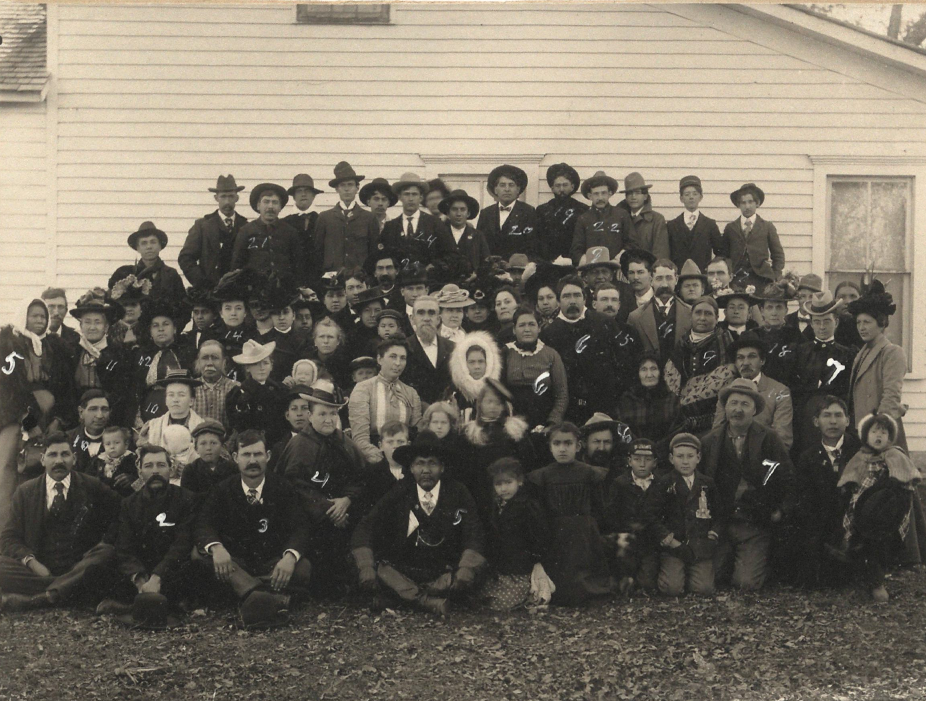
The 1900 Indian Census Roll Photo of the Munsee and Chippewa Indians. (Photo courtesy of the Moravian Church Archives)
GOVERNANCE
Many of the earliest ancestors of The Munsee Tribe in Kansas were significant leaders within their Tribe. These include: Netawatwes, the head Chief of the Lenape-Delaware at Newcomerstown; Bemino, the War Chief during the French and Indian War; and Gelemend, or John Henry Kilbuck Jr., the Head Chief during the American Revolution. [i] Israel Welapachtshechen, one of the Christian Indian martyrs of the Gnadenhutten massacre, was also Head Chief at the time of his death.
When they arrived in Franklin County, Kansas, the Munsee confederated with the Swan Creek and Black River bands of Chippewa through a treaty on July 16th, 1859. [ii] The Chippewa had been living and transforming the land since 1836, though they were originally from the Saginaw, Michigan region. The two tribes, overcoming differences in language, cultural practices, and heritage, became a more united group and lived peacefully together for the next 41 years. The Tribes created a Tribal Council, made up of both Chippewa and Munsee members, to discuss important decisions and track the annuity payments received from the United States government. William Henry III, a descendant of the Kilbuck chiefs listed above, served on this council around 1871-1881. Other Tribal Council members include Edward McCoonse (Chippewa), Ignatius Caleb (Munsee), and Robert Napetah (Chippewa). George Veix also served as a clerk for this council. [iii]
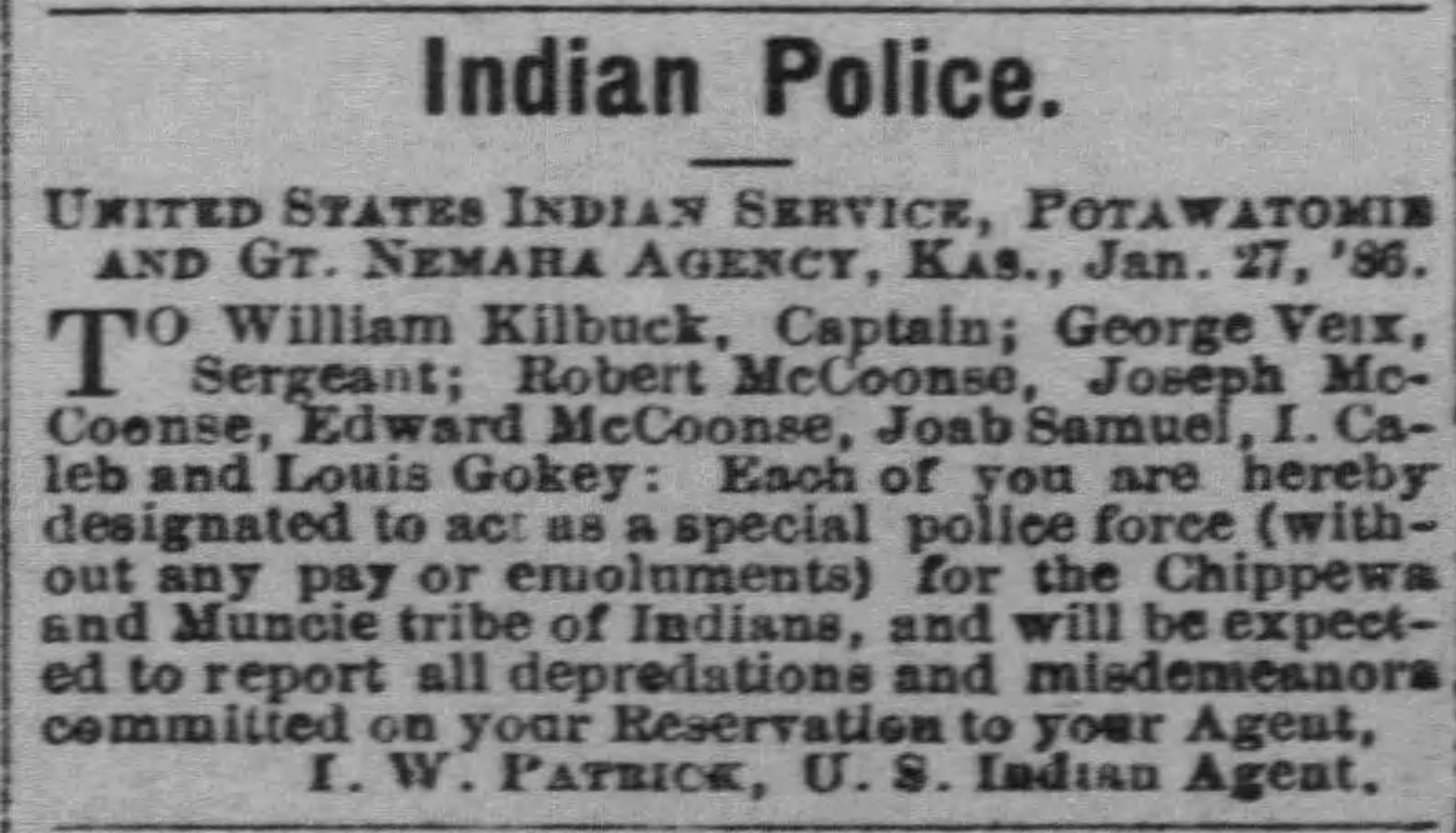
The Tribe served as their own police force on the reservation. In 1886, I. W. Patrick, a U.S. Indian Agent, reported the following ranks: William Kilbuck, Captain; George Veix, Sergeant; Robert McCoonse, Joseph McCoonse, Edward McCoonse, Joab Samuel, Ignatius Caleb, and Louis Gokey, Officers. [iv]
[Image: A newspaper clipping from the Independent Journal in Ottawa, Kansas, published February 4th, 1886. Courtesy of Newspapers.com.]
According to records, the Chippewa and Munsee Tribal Council operated separately from the Moravian Church, though the Moravian missionaries did serve as clerks and record keepers for the Tribe. Throughout the late 1800s, the Chippewa and Munsee Council brought forward several decisions about the future of the Tribe. One of these was the possibility of both Tribes removing to Indian Territory, which is now the state of Oklahoma. Although small groups would go to Oklahoma to scout out potential plots, the decision ultimately never went through due to the desired land being sold, a lack of funds, and a unanimous decision if everyone in the Tribe wanted to move was never reached. [v] Despite the Chippewa and Munsee not moving as full Tribes, individual family units did. Today, several Munsee families still live in Oklahoma or other parts of the United States after their ancestors moved from the reservation.
Another long discussion involved the United States government, over the possibility of the Chippewa and Munsee becoming United States citizens. This would involve the Tribes members giving up their Tribal status and dissolving the reservation into individual plots of land. Citizenship would allow the tribes to have jurisdiction over their land, much of which the Tribe had transformed into successful farms, sawmills, and quarries, and vote in United States elections. It would also mean, however, they would lose the annuity payments from the government and their status as a recognized tribe. Ultimately, the Chippewa and Munsee were made into U.S. citizens. They received their final annuity payment in November 1900. This is where the photo (displayed at the top of this page) of both Tribes was taken, including the Missionary Reverend Joseph Romig and C. Murphy, the Indian Agent. [vi]
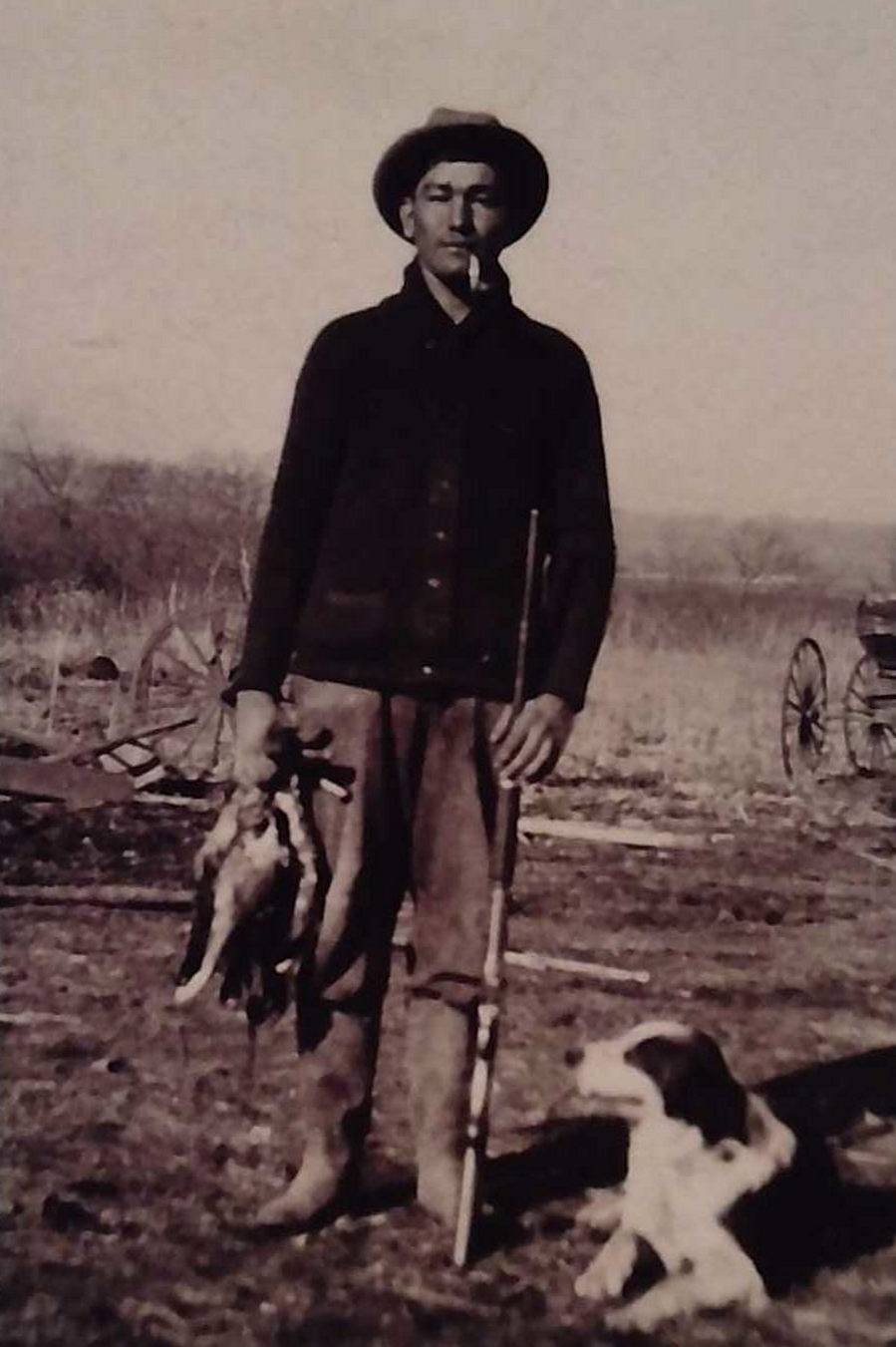
When the reservation was dissolved, many of the Chippewa and Munsee individuals ended up buying their own land back to continue living and farming on the land they had worked for decades. This region became known as the “Chippewa Hills,” and the community remains active to this day. They regularly assisted one another with laborious tasks, held meetings and gatherings at the church house, and attended parties and dinners with other Tribe members. One tradition hosted by the residents of the Chippewa Hills was the annual Thanksgiving Hunt. The men of the community were divided into two teams, and team captains were appointed. During the hunt, individuals earned points for each rabbit they caught, and whichever team had the most points by sunset won. After the hunt, the community came together to share a large oyster dinner at the new schoolhouse. [vii]
[Image: Silas Veix, the son of George Veix, with his hunting dog after a successful everyday hunt. Photo date unknown. Location is estimated to be the Chippewa Hills, where Silas lived with his family and worked on their farm. Used with permission from a descendant of Silas Veix.]
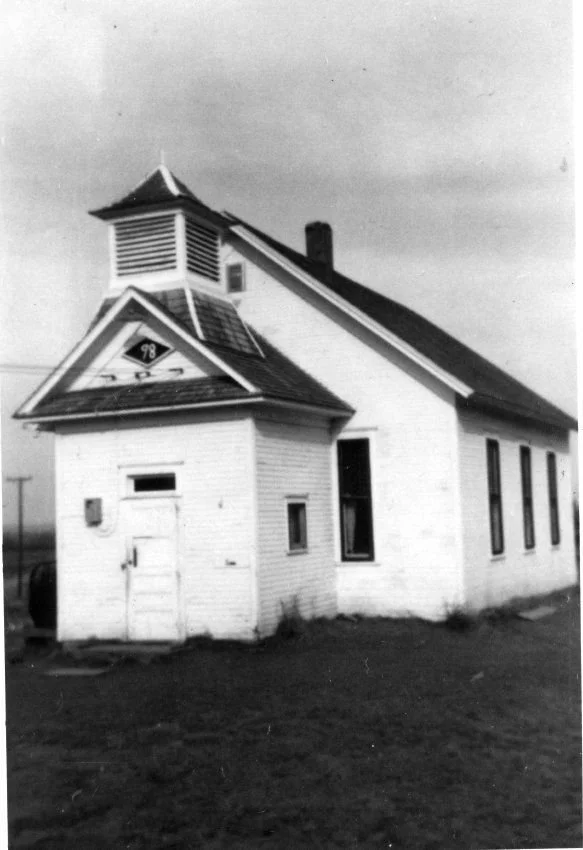
In 1902, a new school district was established on the former reservation, Chippewa School District #98. Several Chippewa and Munsee individuals, including John H. Kilbuck, William Henry Kilbuck, Ignatius Caleb, and George Veix, petitioned the State Superintendent for the school to be created. [viii] While many of the older Indigenous children attended school at Haskell, which was located 35 miles north in Lawrence, a school for the younger children was necessary so they did not have to travel as far. George Veix would go on to serve as the clerk for the school, John H. Kilbuck was the treasurer, and the former Missionary, Joseph Romig, served as the director. [ix]
The school remained open until 1961, when it was moved in one piece approximately 3 miles west to be merged with the Greenwood School building. It was used as a kitchen until 1968, and today it operates as a community center for Greenwood.
[Image: The Chippewa Schoolhouse before it was moved to Greenwood Township. Note the “98” above the door, indicating it was in District #98. This photo is estimated to have been taken some time in the late 1950s. Photo courtesy of the Franklin County Historical Society.]